Wisdom Wednesday · The Reckoning, Week 2
What You Actually Owe the People Whose Jobs You're Automating
Part 2 of 4 · The Reckoning Series
August 11, 2026

Christopher McCormick, Founder & CEO, Visionary Consulting
Priya had built the slide herself. "AI Enablement Roadmap," navy header, three phases across eighteen months. Phase three had a small footnote in eight-point type: projected role consolidation, 12 to 15 percent of the department.
She had a town hall in four days. The talking points from communications said to frame the roadmap as "investing in our people's growth." Priya believed in the growth part. She had also written the footnote. Both things were true, and she had not yet figured out how to say both of them out loud in the same room.
The question hiding inside the strategy deck
Most organizations are treating artificial intelligence (AI) adoption as a strategy question: how fast, which functions, what return. It is also an ethics question, and it is the one nobody puts on the agenda.
What does the employment relationship mean when the organization is actively building the systems designed to need fewer of the people currently doing the work? What is the honest obligation to tell people that before it happens, not after? What does real investment in a person's transition look like, and how is it different from a reskilling webinar that exists mainly to manage what the town hall looks like on camera?
A pattern worth naming plainly: most public reporting on AI adoption shows a wide, and by several recent surveys widening, gap between how many executives say AI will materially change their workforce within the next few years and how many employees say their own employer has told them anything specific about how.
The law already answered a version of this question
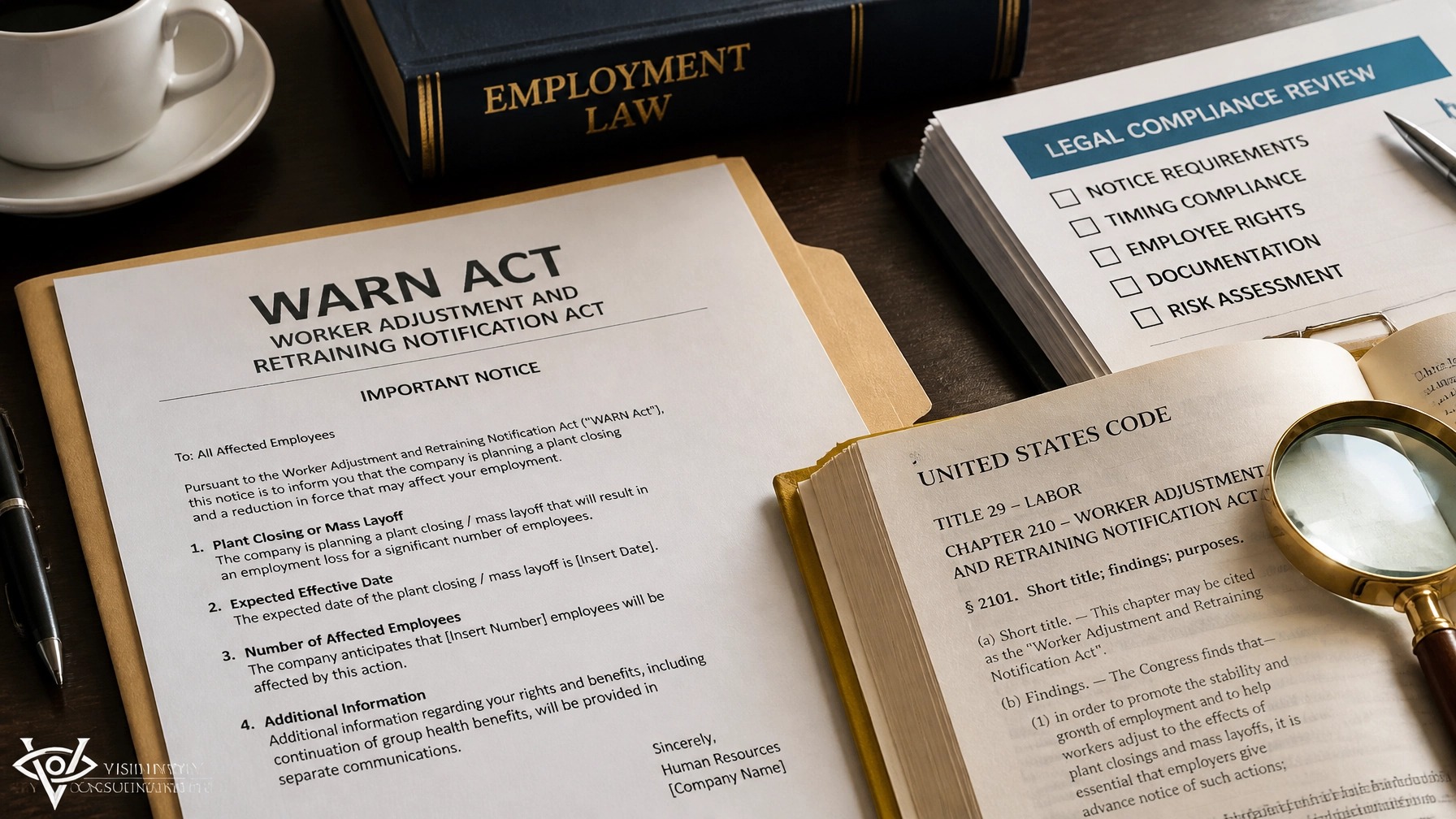
In 1988, the United States passed the Worker Adjustment and Retraining Notification Act, generally known as the WARN Act. It requires larger employers to give workers roughly sixty days of advance notice before a mass layoff or plant closing. The reasoning was not sentimental. Lawmakers decided that people whose livelihoods are about to change deserve enough warning to plan, not a surprise.
AI-driven workforce change rarely trips that law's wire. There is no single closing date, no mass layoff filing. Instead there is a slower version: roles quietly not backfilled, functions consolidated a few people at a time, headcount that shrinks by attrition dressed up as natural turnover. Every one of those moves can be legal and still violate the principle the WARN Act was built on. The obligation to tell people what is actually coming does not disappear just because the mechanism changed.
What genuine investment looks like next to performative reskilling
Here is where the two are easiest to tell apart:
- Performative reskilling announces a training platform. Genuine investment names, specifically, which roles are shrinking and gives people real time and real support to move before the shrinking happens.
- Performative reskilling talks about "the future of work" in the abstract. Genuine investment tells an individual person, honestly, whether their specific role is likely to exist in two years.
- Performative reskilling measures success by course completions. Genuine investment measures success by how many people actually landed somewhere better, inside the company or out of it.
- Performative reskilling protects the organization's optics. Genuine investment protects the person's ability to plan their own life.
Question for you: if you audited your own reskilling program against that list, which side would it land on?
The trust that gets built by giving it away first
MacKenzie Scott's approach to philanthropic giving removed the layers of process that most large donors use to protect themselves from risk. No lengthy application. No proposal review board second-guessing the recipient's judgment. She gave first, trusted the people closest to the problem to know what to do with it, and let the results follow. The model worked because the trust came before the proof, not after it.
Most organizations going through an AI transition are asking for the opposite. They want employees to trust leadership's intentions while leadership withholds the specifics of the plan until it is finished. Trust does not usually flow uphill on faith alone, especially from people who have already watched their industry make promises it didn't keep.
Question for you: has your organization ever given its people the specifics before it had to, or only after someone forced the issue?
The mirror
You may already know whether your own transition plan would survive Priya's town hall. If the honest answer to your people is "we don't fully know what this means for your role yet," that is a defensible thing to say, as long as you say it. What is not defensible is knowing and choosing language that avoids saying it.
The call

This is not an argument against using AI to change how your organization works. It is an argument that the obligation to your people did not disappear just because the tool changed. The Reckoning does not offer a script for the town hall. It offers the question you have to answer honestly before you write one.
If you are building an AI roadmap and are not certain your organization has told the truth about what it means for the people in it, that is the conversation Visionary Consulting exists to have with you.
Where Vision Meets Reality.
The The Reckoning Series
What leaders owe the people and institutions caught in the middle of automation.
- 01Wisdom Wednesday: The Manager You Automated Was Never the Manager You Needed
- 02What You Actually Owe the People Whose Jobs You're Automating (you are here)
- 03DEI Forecast: Cloudy, With a 100 Percent Chance of Backpedaling
- 04Nobody Believes the Culture Deck. They Believe Who Got Promoted Last Quarter.
Ready to talk it through?
Book a free consultation (30 min) →