Wisdom Wednesday · The Reckoning, Week 4
Nobody Believes the Culture Deck. They Believe Who Got Promoted Last Quarter.
Part 4 of 4 · The Reckoning Series
August 25, 2026

Christopher McCormick, Founder & CEO, Visionary Consulting
Theo read the resignation email twice before he called Alicia in. She was his strongest analyst, two years into the role, the person he had already mentally slotted into a promotion conversation for next quarter.
The exit interview had a standard question: was there anything the company could have done? Alicia thought about it longer than he expected, then gave him the honest version instead of the polite one. In 2022, leadership told her team a reorg would not touch them. Six months later it did. Nobody explained why. Nobody acknowledged that the earlier promise had not held. A new org chart just appeared in her inbox on a Tuesday.
I didn't leave because of the money. I left because I stopped believing what you tell us in State of the Company Open Forums.
The question retention surveys don't ask

Most retention and engagement programs are still measuring satisfaction, culture perception, and pay competitiveness. Alicia's score on all three would have looked fine right up until the week she left.
What she was actually tracking was something no survey asked about: whether the organization told the truth about hard things before it had to, and whether it kept commitments once they became inconvenient to keep.
A 2024 PwC trust survey found a striking gap: 86 percent of executives believe employee trust in their organization is high, while only 67 percent of employees say they highly trust their employer — a 19-point gap between what leadership believes and what people actually feel. A separate 2026 internal communications study found the same pattern on a harder measure. Eighty-seven percent of senior leaders believe they have clearly communicated their strategy. Only 57 percent of employees agree.
A pattern worth naming plainly: leadership and employees are not disagreeing about the strategy. They are living in two different accounts of whether anyone actually explained it.
The mentor who answered every letter

Stephen Sondheim spent decades personally replying to letters from young, unknown writers who wrote to him for advice. He read their work, sent notes, and stayed in correspondence with people who had nothing to offer him professionally, years before anyone had heard of them. Lin-Manuel Miranda has spoken publicly about receiving that kind of attention from Sondheim long before In the Heights existed. The relationship was not transactional. Sondheim invested before there was any evidence it would pay off, and he kept investing after there was no career reason left to.
That is what genuine loyalty looks like from the side with the power in the relationship. Not a mission statement about valuing people. A pattern of specific, sustained behavior that never required the other person to become useful first.
The unwritten contract
Organizational psychologists have a name for what actually governs the employment relationship: the psychological contract. It sits underneath the signed offer letter and covers everything the letter does not — the informal, mostly unstated expectations both sides operate on about fairness, security, and how hard things will be handled when they come up. Employees do not usually notice it until it breaks.
The research on what happens after it breaks is consistent. When employees perceive that an organization has broken one of these implicit promises, whether about development, security, or fair treatment, studies find measurable drops in motivation, job satisfaction, and organizational commitment, alongside a rise in the intention to quit. The reverse also holds, and it is more useful to leaders than the warning is. Employees who experience their leadership as transparent are roughly 1.6 times more likely to feel trusted, 1.8 times more productive, and 2.3 times more focused than employees in less transparent organizations. Trust is not a soft outcome sitting next to the metrics that matter. It is measurably attached to them.
The last five years gave people a great deal to notice. Layoffs announced the same day they took effect. Return-to-office mandates reversing flexibility that had been promised as permanent. The kind of AI transition Week 2 of this series described, where roles quietly disappear without anyone naming it out loud. The kind of values retreat Week 3 described, where language changes and nobody says whether the underlying belief changed with it. None of these moments show up as a single dramatic betrayal. They accumulate, the way Alicia's did, until someone stops believing what they are told in a State of the Company Open Forum.
The people your culture actually protects
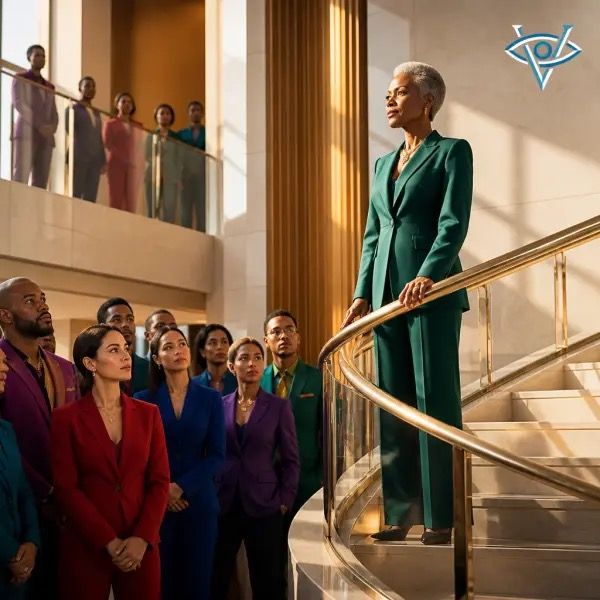
Every organization has a culture deck. A values slide, a mission slide, maybe a quote from the founder. Almost none of them audit whether the people who violate everything on that slide are the same people getting promoted.
There is a specific pattern worth naming instead of gesturing at politely. The manager who hits every number and burns through three direct reports a year doing it. Leadership knows. HR has the exit interview data sitting in a folder somewhere to prove it. That manager keeps getting promoted anyway, because the number is easy to defend in a board meeting and the damage is not, and because nobody wants to be the person who tells a top performer no.
There is a second pattern that gets even less scrutiny, because it wears the language of strategy instead of the language of results. The executive who uses a reorg to expand their own territory and calls it efficiency. Nobody questions a restructuring that happens to route three more teams and a bigger budget through the person who proposed it, especially when the memo is written in the language of "reducing management layers" or "streamlining decision rights." The org chart changes. Headcount consolidates upward, toward the person who is now harder to remove, not easier. The story told externally is about efficiency. The story that actually happened is about territory.
Employees clock both patterns faster than the people running them. Nobody needs to send a memo about who the culture actually protects. People watch what happens when a complaint about the top performer reaches HR and goes nowhere. They watch whose scope keeps growing every time the company announces it is cutting layers. That is the loyalty program that is actually running, underneath the one in the employee handbook.
Question for you: if you mapped who got promoted and whose scope grew over the last two years, would that map match what your organization says it values, or would it tell a different story?
The evidence people are indeed collecting
Nobody keeps a formal file on this. They do not need to. A small number of concrete moments do the evidentiary work for years:
- Did leadership tell people about the hard thing before it happened, or did people find out from a calendar invite or a press release?
- When a commitment got expensive to keep, did the organization keep it anyway, or quietly redefine it?
- Did anyone in leadership say "we were wrong" out loud, or did the explanation stop at "the market changed"?
- Were people treated as ends, worth investing in regardless of near-term payoff, or as means, valuable only as long as they were useful?
- Did the highest performer with the worst reputation ever actually face a consequence, or just a quiet word that changed nothing?
- Did the last reorg make the organization more effective, or did it mainly make one person harder to challenge?
Question for you: if your best people were asked to list the specific moments that shaped what they believe about this organization, would you know what would be on that list?

The mirror
You cannot fix a psychological contract with a better engagement survey. Surveys measure how people feel about the present. Trust is built and lost through what people watched the organization do the last time it was hard, and no dashboard captures that history the way the people who lived it do.
This is not an argument for making promises you are not sure you can keep. It is an argument that the promises you do make are being weighed against a specific, remembered record, not against your intentions.
The call
This closes The Reckoning. Four weeks, four questions the leadership content industry keeps avoiding: whether the manager role survives once the administrative work is gone, what you owe your people in an AI transition, whether your values were ever real if they needed good conditions to survive, and now, whether loyalty means anything once people have watched what your organization actually does under pressure.
Every leader in the Revolutionary Leadership Series earned trust the same way Sondheim did: through a specific, sustained record, not a stated intention. That was true in July. It is still true now, and it does not get easier to practice just because the disruption has a new name this year.
If you are not certain your organization's record would hold up against the questions this series has asked, that conversation is exactly what Visionary Consulting exists to have with you.
Where Vision Meets Reality.
The The Reckoning Series
What leaders owe the people and institutions caught in the middle of automation.
- 01Wisdom Wednesday: The Manager You Automated Was Never the Manager You Needed
- 02What You Actually Owe the People Whose Jobs You're Automating
- 03DEI Forecast: Cloudy, With a 100 Percent Chance of Backpedaling
- 04Nobody Believes the Culture Deck. They Believe Who Got Promoted Last Quarter. (you are here)
Ready to talk it through?
Book a free consultation (30 min) →