Wisdom Wednesday
The Capability AI Can't Simulate Yet
Part 3 of 3 · Capability Series
November 18, 2026

This week's capability is presence: being fully with someone in a moment that matters, at a real cost to you.
The draft is better than anything Mitch would have written himself.
It's 4:40 on a Thursday. An hour ago, the executive team killed the platform project that Kylie has led for two years. Mitch argued for it and lost. Now he has to tell her before the company-wide email goes out at six.
He asked the AI assistant built into his email to help. Ten seconds later, there it was: warm, specific, generous. It named what Kylie built. It acknowledged how much this would hurt. It even included a line about her future at the company that Mitch hadn't thought to say.
His cursor sits on Send. The office around him is emptying out, chairs rolling back, someone laughing near the elevators.
He reads the message one more time. Every word is right. Sending an email seems wrong.
So he closes the laptop, takes the stairs down the two floors, and finds Kylie at her desk, already packing the prototype into its foam case, because she heard in the hallway.
Mitch is a stand-in name, a composite of the leaders I coach. The perfect draft is real. More and more of them are.
The Capability: Presence
Two weeks ago, the capability was recovery: what you do after you're wrong. Last week, it was ownership: making the call with your name on it. This week's capability is the one that stays human the longest. It's presence.
Here it is, plainly:
Presence is the ability to be fully with someone in a moment that matters to them, with your attention, your time, and something of your own at stake.
Presence has three parts:
- Attention. Undivided. Not half-listening while you check the next meeting.
- Cost. It takes something from you: time you didn't have, comfort you would rather keep, a seat in the hard room.
- Stake. You'll still be there tomorrow, accountable to the person and the relationship. You can't log off from what you just said.
In August, The Reckoning asked whether the manager role is still necessary as AI automates the administrative core of the job. This is the answer from the other side of that question. The schedules, the status reports, the first drafts are going. What's left, and what matters more as the rest disappears, is presence.
The Machine Wrote the Better Message

Let's be honest about where the technology already is, because most leadership advice about AI and empathy is out of date.
In 2023, researchers led by John Ayers at the University of California, San Diego, published a study in JAMA Internal Medicine. They took 195 real patient questions posted on a public online forum and compared the answers written by verified physicians with answers from ChatGPT. A panel of licensed health professionals, who didn't know which was which, preferred the chatbot's answers 79% of the time. They rated 45% of the chatbot's answers as empathetic or very empathetic, compared with under 5% of the physicians'.
Read that again as a leader. On the page, the machine was better at sounding like it cared.
If the capability AI can't simulate were "saying the empathetic thing," the article would end here. It doesn't.
Same Words, Different Weight
A year later, three researchers at the University of Southern California's Marshall School of Business, Yidan Yin, Nan Jia, and Cheryl Wakslak, published a study in the Proceedings of the National Academy of Sciences with a title that says it all: "AI can help people feel heard, but an AI label diminishes this impact."
They found that people felt more heard by AI-written responses than by responses from untrained humans. AI was better at spotting emotion and better at offering support. But when people were told the response came from AI, they felt less heard, and that penalty roughly canceled out the advantage.
The words were the same. What changed was who sent them.
That's the whole lesson for leaders. Feeling heard was never only about the words. It was about knowing that a real person, with limited time and other things they could have been doing, chose to spend it on you.
What the Machine Can't Spend
Presence works because it is costly. That's exactly what AI, for all its fluency, can't offer:
- Time. A machine's attention is free and unlimited. Yours is neither. That's why it means something when you give it.
- Risk. When you walk into the hard conversation, you can be wrong, interrupted, or blamed to your face. A drafted message can't be.
- Continuity. You'll be in the hallway next Tuesday. You'll remember what was said. So will they.
- Choice. Showing up means choosing this person over something else on your calendar. They know that. They can feel it.
Strip those four away and you have a beautifully worded message. Keep them and you have leadership.
Presence Always Matters

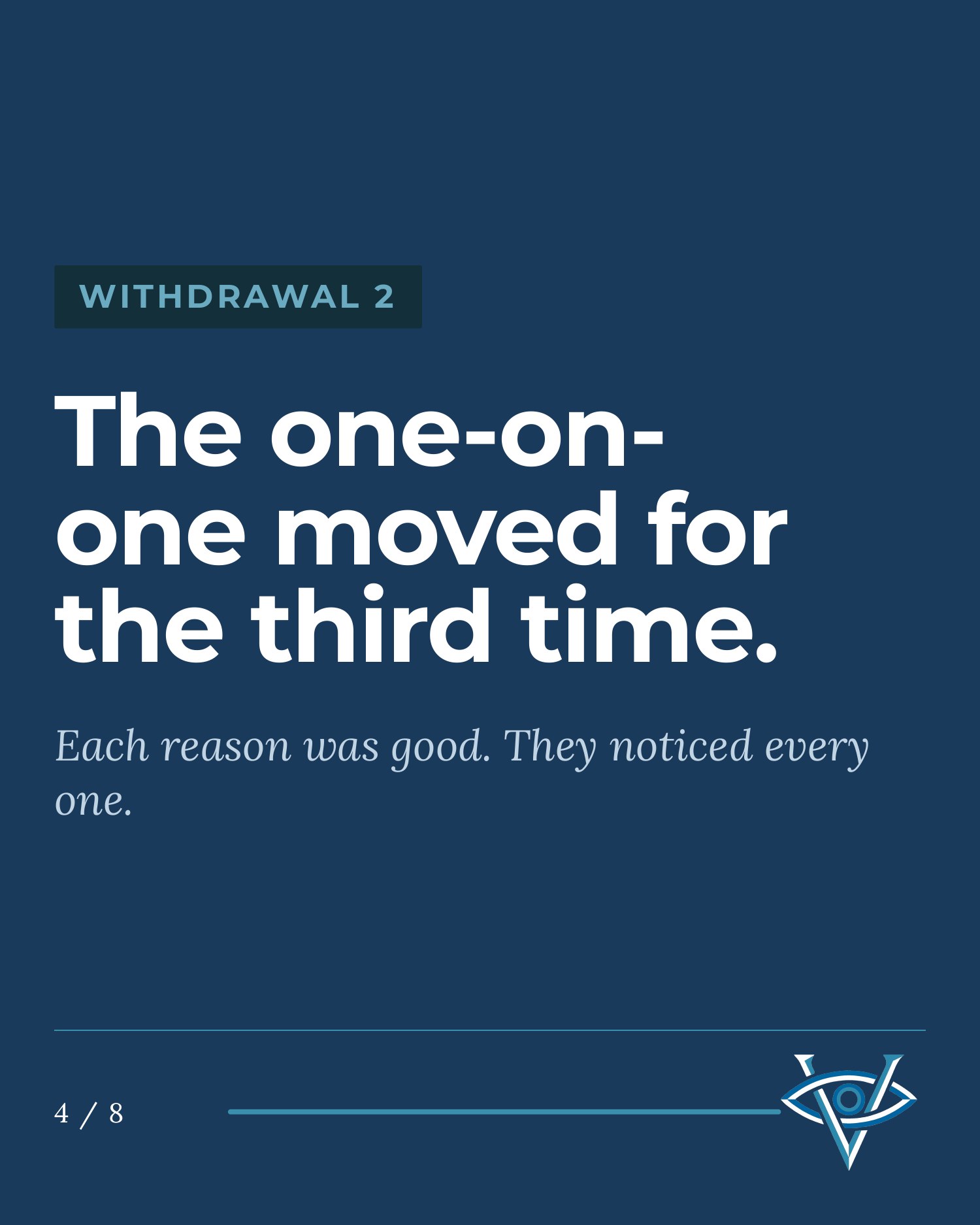
Here's the part of Mitch's story I left out. He had canceled his last three one-on-ones with Kylie.
Each cancellation had a good reason. A board prep. A customer escalation. A budget review that ran long. None of them felt like a big deal at the time. Kylie noticed every one.
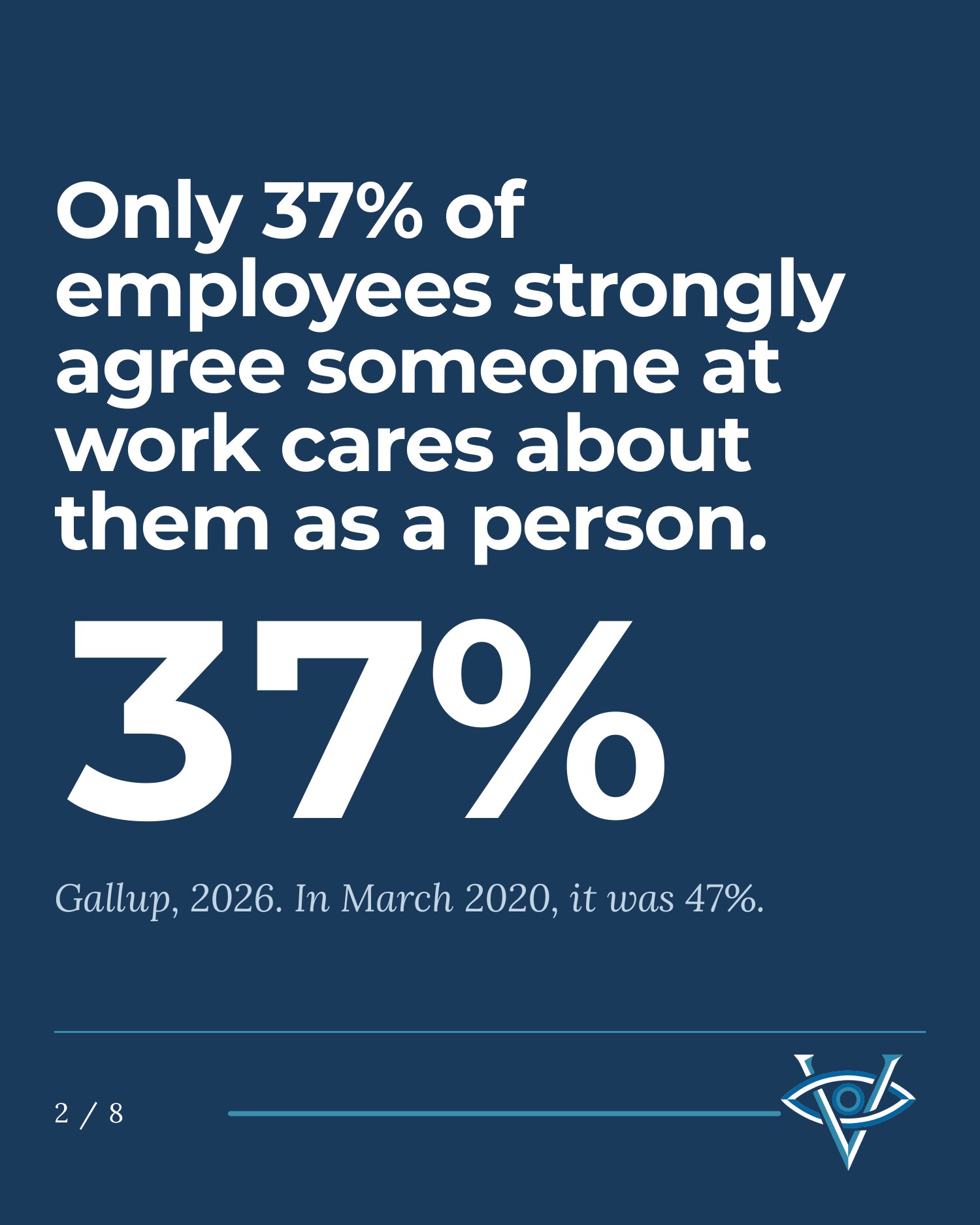
Gallup's newest data shows how many people are keeping that kind of score. In its survey of more than 21,000 U.S. workers this past August, employee engagement fell to 29%, its lowest level since 2011. And the number that should stop every manager cold: only 37% of employees strongly agree that someone at work cares about them as a person. In March 2020, that figure was 47%.
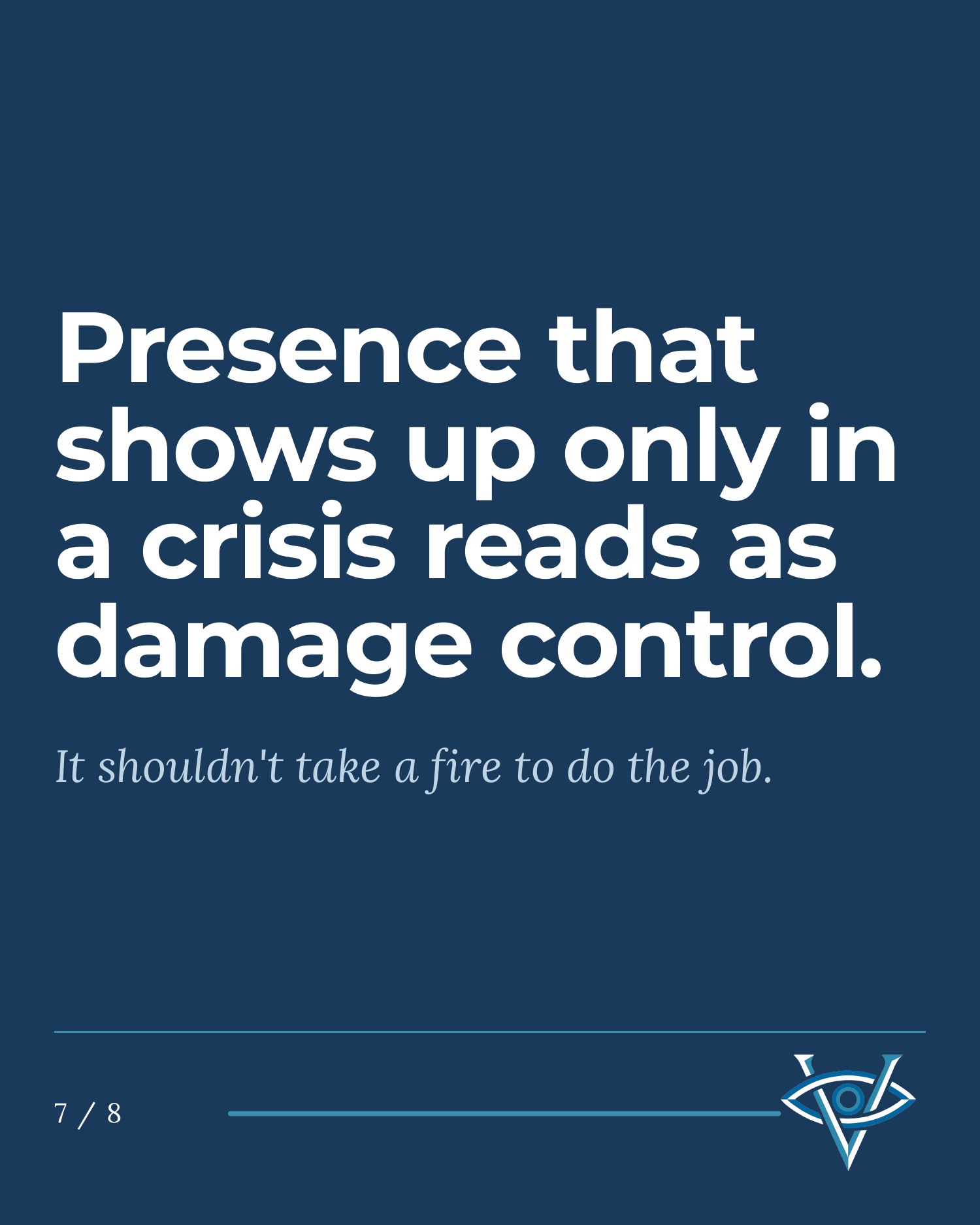
It shouldn't take a fire to get a manager to do the job a manager is supposed to do.
Presence isn't a crisis skill. It's an everyday one, and it gets built or spent in the moments that feel routine:
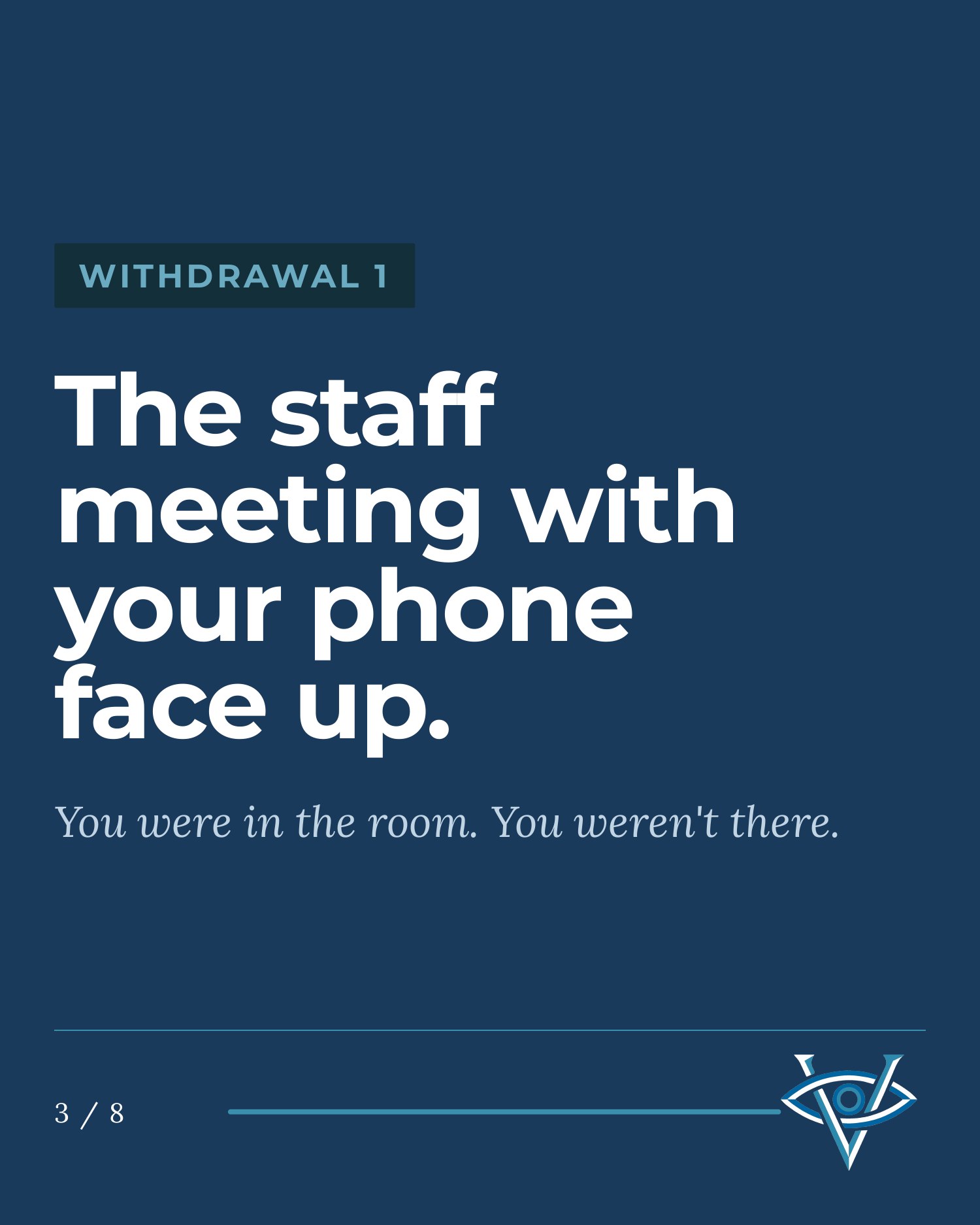
- The staff meeting you skip, or attend with your phone face up.
- The biweekly one-on-one moved for the third time this month.
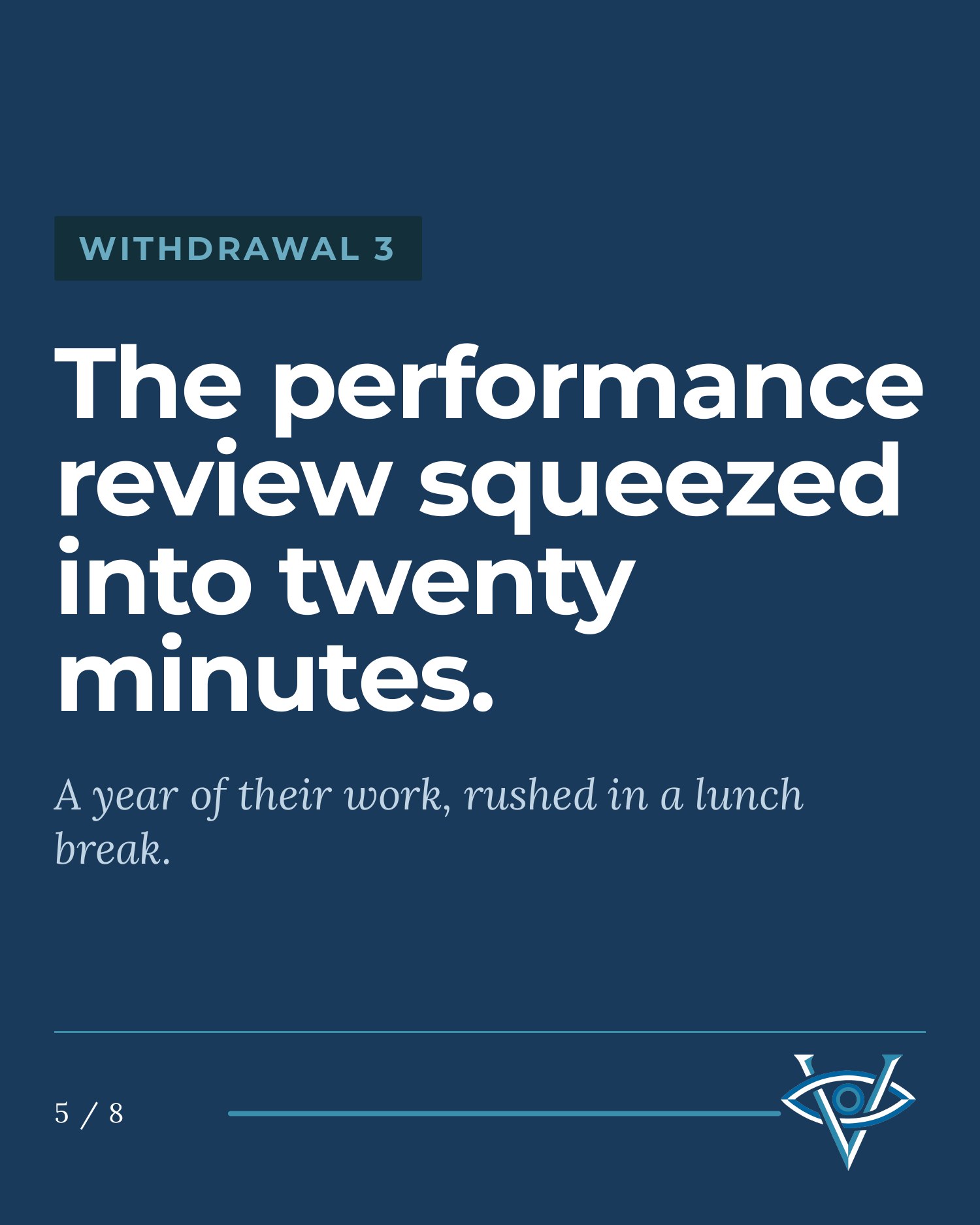
- The performance review squeezed into twenty rushed minutes.
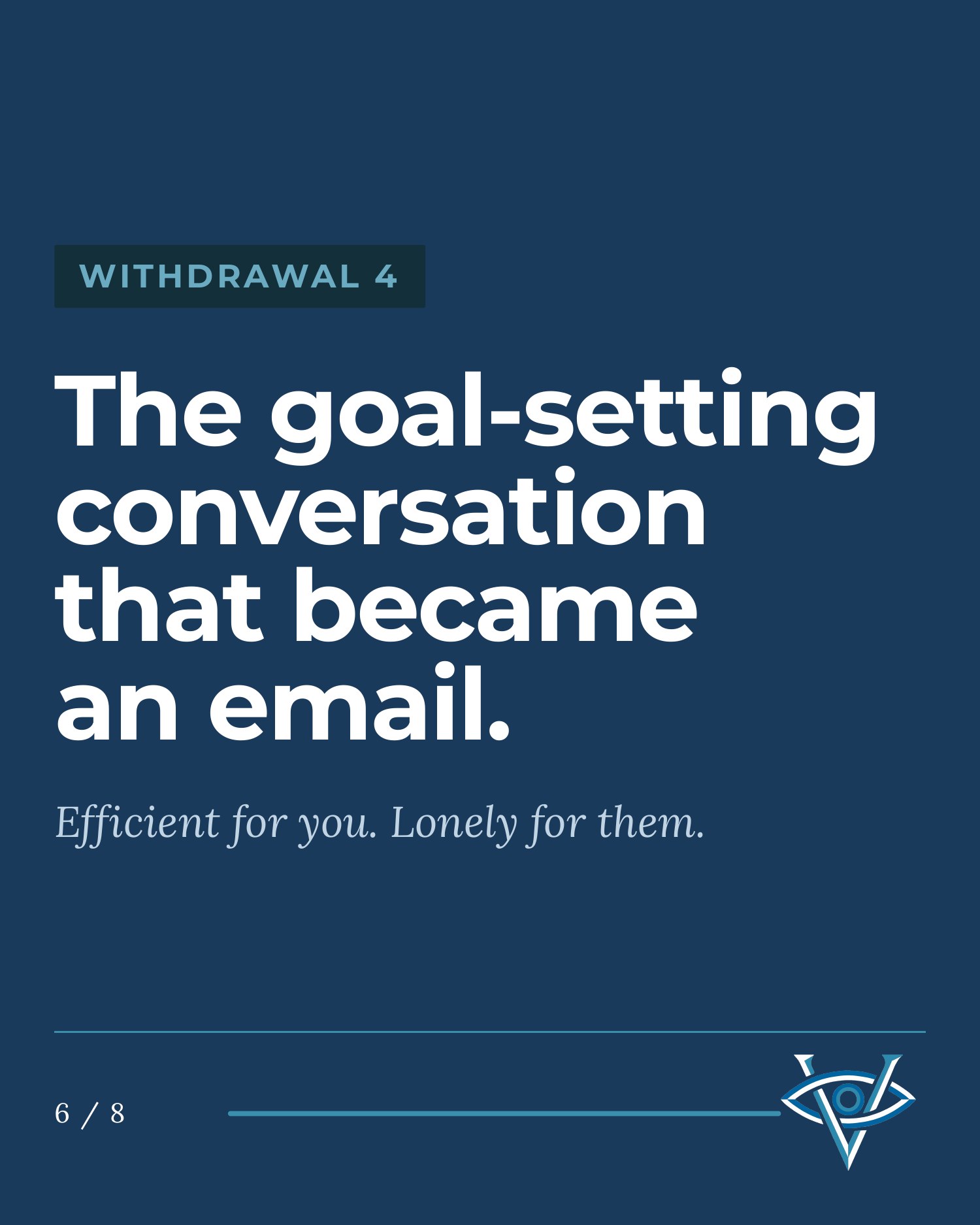
- The goal-setting conversation that quietly became an email.
Every one of those is a deposit or a withdrawal in a trust account. When the hard moment finally arrives, the cancelled project, the reorg, the call that lands badly, you can only draw on what you've already put in.
A leader who shows up only for the fire has very little in that account. And presence that appears only in a crisis doesn't read as care. It reads as damage control. People can tell the difference between a manager who is always there and one who arrives when the stakes are high enough to make it worth their time.
The high-stakes moments still matter. Bad news, the moment after you got something wrong, the moment after you made the call. Recovery and ownership, the last two weeks, both depend on you showing up for them. But they only land if the everyday deposits came first.
The Delegation Trap
Here's the risk nobody in the AI rollout meeting is talking about. The messages leaders most want to hand off are the hard ones, and the hard ones are exactly the ones that need them.
Used well, AI makes presence better, not rarer:
- Prepare with it. Deliver as you. Let it help you find the words. Then say them yourself, in person or on a live call.
- The harder the message, the closer you stand. Email for the routine. Video for the important. The room for the painful.
- Spend the time it saves. If AI gives you back five hours a week, put some of them into the conversations it can't have for you.
A note on the title. It says "yet" on purpose. The technology will keep getting better at simulating care. But even a perfect simulation can't make your time scarce, your presence costly, or your stake real. Those belong to you.
The Message You'd Rather Send
Think about the hardest conversation you have coming in the next two weeks. The one you've been drafting in your head.
Now be honest. Are you planning to send it, or say it?
Then open your calendar and look back over the last month. How many one-on-ones did you move or cancel? How many meetings did you attend without really being there? That's your trust account balance, and the people on your team already know the number.
If you're planning to send the hard message instead of saying it, ask what you're protecting. Your time? Your comfort? Their reaction? Then ask what it would cost them to receive it from a screen instead of from you.
Two Floors Down
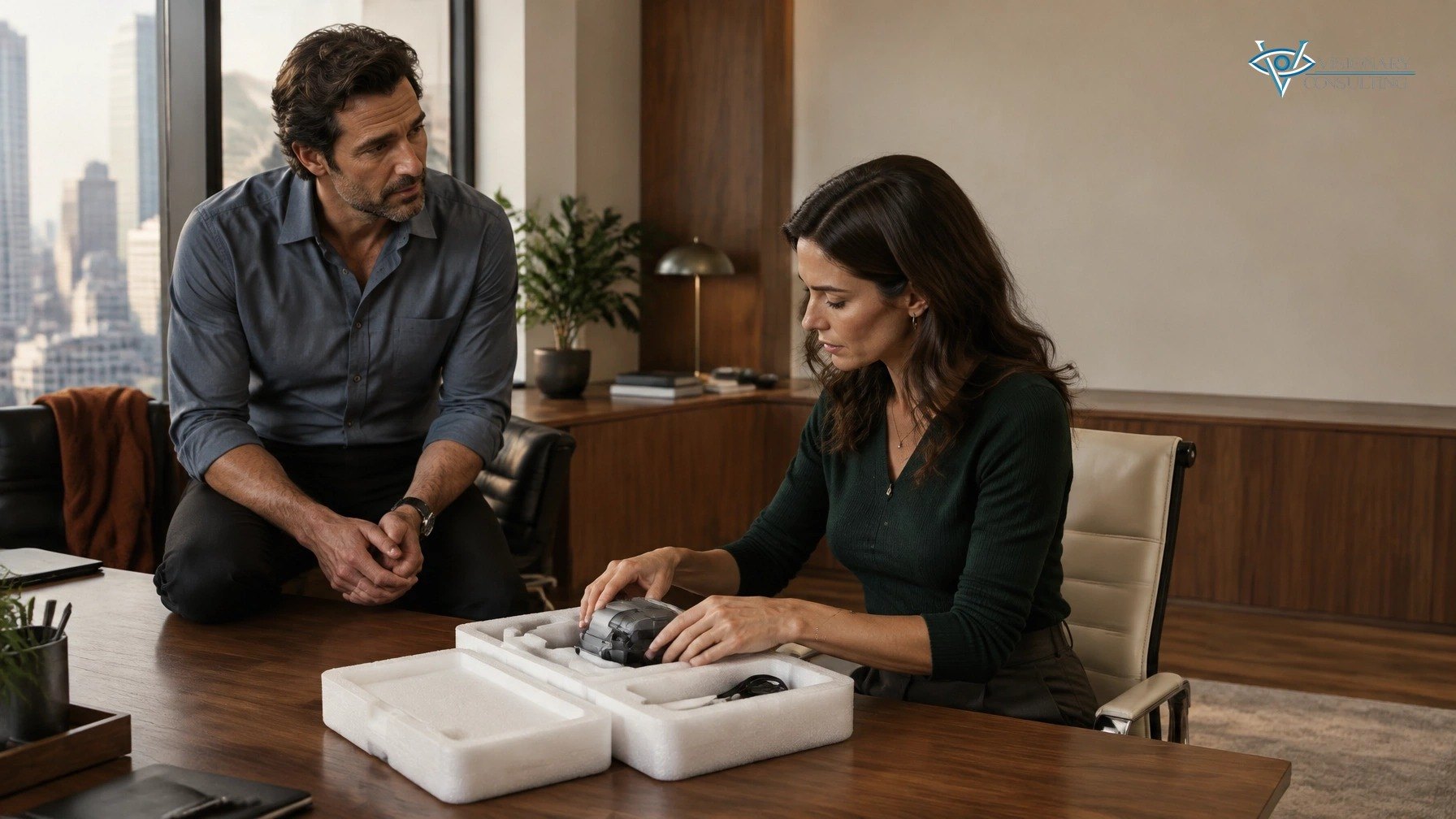
Mitch didn't say anything as good as the draft. He sat on the edge of the desk next to Kylie and said, "I argued for it. I lost. I'm sorry. And I wanted you to hear it from me, not from a six o'clock email."
Kylie kept packing. "Thanks for coming down," she said. It sounded polite, not warm. Three canceled one-on-ones will do that.
Walking down two flights of stairs was the right call. It just wasn't enough on its own, because the account was already low.
So on Monday, Mitch put their one-on-one back on the calendar. And for the first time in two months, he kept it. And the one after that.
AI can write the words. Only you can be there when they land.
Next week, the last piece of Capability month: the cost of a good yes. If your trust account is running lower than you'd like, let's talk about how to rebuild it.

1 / 8
The Capability Series
- 01The Skill No Competency Model Measures
- 02You Can't Coach a Muscle You've Never Tested
- 03The Capability AI Can't Simulate Yet (you are here)
Ready to talk it through?
Book a free consultation (30 min) →