Wisdom Wednesday
You Can't Coach a Muscle You've Never Tested
Part 2 of 2 · Capability Series
November 11, 2026

This week's capability is ownership: making the final call, with your name on it, when there's no one above you to hand it to.
Jeffery's hands are cold, which annoys him, because the conference room is warm.
It's 7:50 on a Tuesday morning. In ten minutes, the board joins by video to hear how the company will respond to losing its largest customer, the one that walked out on Friday and took nearly a fifth of next year's revenue with it. Jeffery has the deck. He has the numbers. He has three options, and he knows which one he believes in.
What he doesn't have is the person who used to sit in the chair beside him and make the final call.
For nineteen years, Jeffery has been the steady one. He has run reorgs, integrations, two leadership transitions, and more budget cycles than he can count. He has built the analysis behind dozens of big decisions. But on every call this size, someone above him chose, signed, and took the heat. His CEO retired in September. Today, the call is his.
He straightens a stack of printouts that doesn't need straightening. A thought arrives that he has never let himself finish:
Nineteen years, and I've never actually owned the final call.
Jeffery is a stand-in name, a composite of the leaders I coach. The cold hands are real. So is the thought.
The Capability: Owning the Final Call
Last week's capability was recovery: what you do after you get something wrong. This week's capability comes before that. It's ownership.
Here it is, plainly:
Ownership is the ability to make a consequential decision with incomplete information, with no one above you to hand it to, and to stand behind it with your name on it.
Ownership has three parts, and a leader needs all three:
-
Choosing. Picking one option when the data is incomplete and the clock is running out.
-
Saying it. Stating the decision out loud, with your name on it: "I recommend this, and here's why."
-
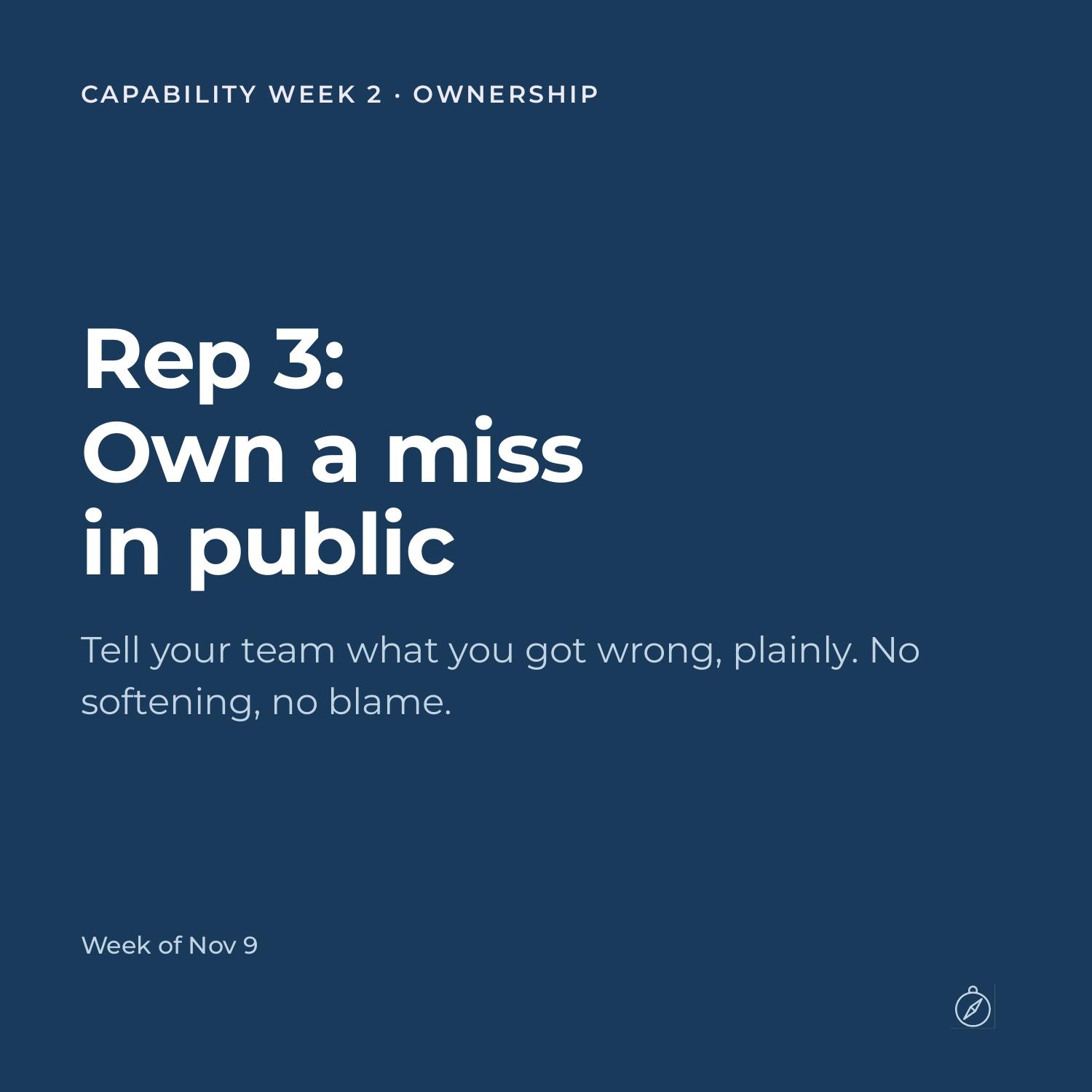
Carrying it. Living with the consequences in public, and coming back to fix it if it goes wrong. That's where last week's recovery takes over.
Jeffery is excellent at everything that leads up to a decision. He gathers input, frames options, and builds the case. What nineteen years never asked of him is the last step: owning the call.
The Understudy
I learned what ownership feels like on a stage, long before I ever coached a leader.
During my theatre years, I was cast in a show as a member of the ensemble, and I was also the understudy for one of the supporting leads. Most nights, I did the job I was hired to do. The dance numbers. The songs. Moving set pieces during the changes. The costume changes in the wings. And because I was the understudy, I knew that supporting role cold: every line, every piece of blocking.
Then the actor I covered was out, and I went on.
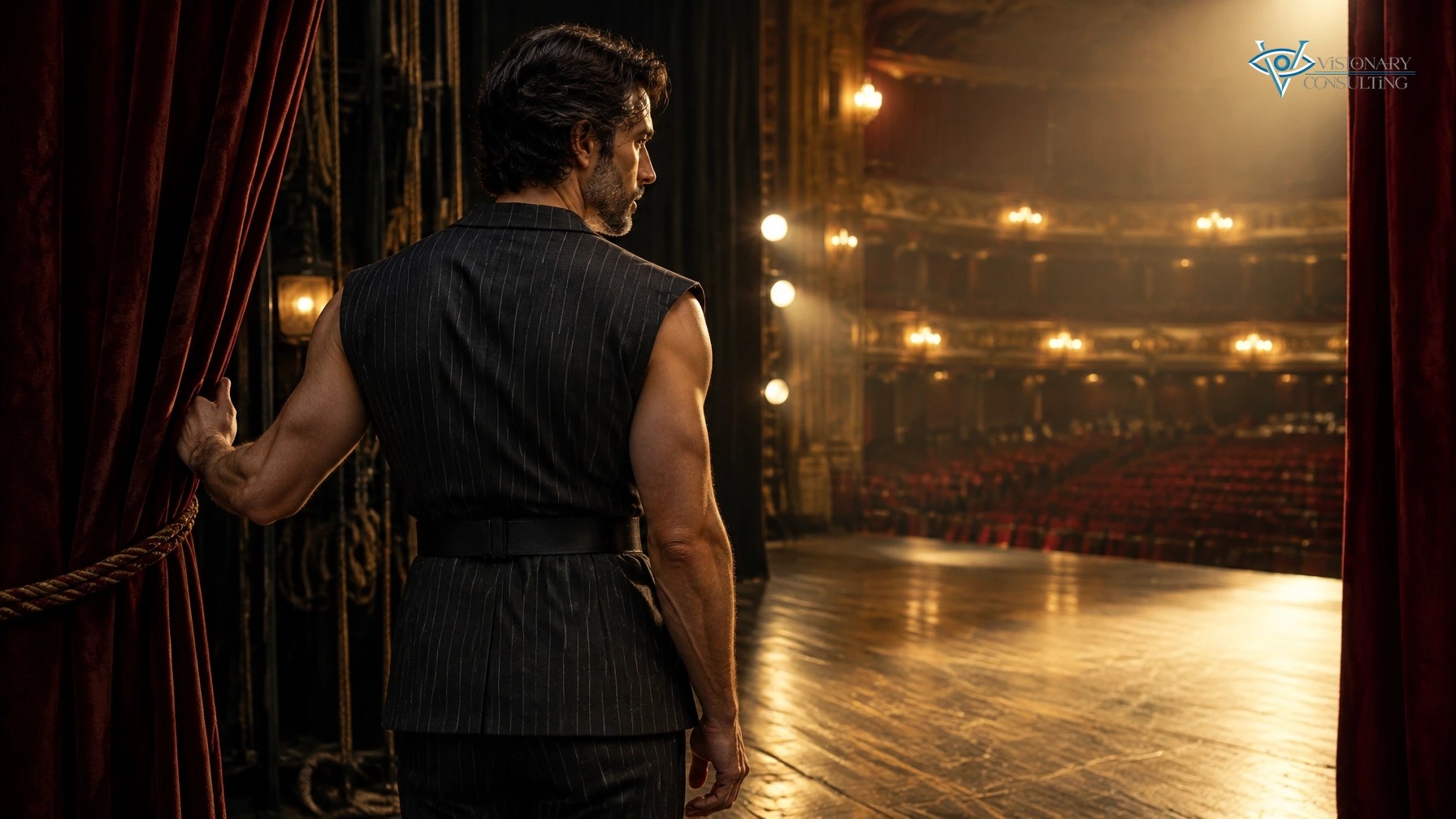
I knew the lines. I knew the blocking. I knew the inflections, because I had heard someone else deliver them for weeks. I knew how every scene was supposed to go when they did it.
None of that prepared me for the moment the lights hit. In front of thousands of people, it wasn't their role anymore. It was mine. Live theatre has no cut, no second take, no editor to fix it later. You are in the moment, in that character, and it is all yours to own.
The trap for an understudy is the thought, "This is their part. I'm just filling in." The audience doesn't care whose part it usually is. They came to see the character tonight. You either deliver, or you don't.
There's no hiding when the lights are on.
Jeffery has been an understudy for nineteen years. He knows the lines. He knows the blocking. He knows exactly how his CEO used to deliver hard news to the board. What he has never done is go on.
Organizations read tenure as capability. But standing next to the person who owns the call is not the same as owning it. And you can't coach a muscle nobody has ever asked to work.
Twenty Years of Practice, One Year of Learning
Medicine, a field that runs on experience, has tested whether more years means more capability.
In 2005, a team led by Niteesh Choudhry of Harvard Medical School published a systematic review in the Annals of Internal Medicine asking whether physicians get better with years in practice. They looked at 62 studies. About half found that physician performance declined over time on every outcome measured. Only one found improvement on all of them.
Psychologist K. Anders Ericsson's research on deliberate practice helps explain why. Studying violinists at a music academy in Berlin, he and his colleagues found that what separated the best performers wasn't how long they had been playing. It was how much of their time had gone into focused, effortful work on what they couldn't yet do, with feedback.
Ownership works the same way. Years beside the decision don't build it. Only making the decision does, again and again, with real consequences attached.
Renters and Owners
There's another way to see the difference, and most of us have lived on both sides of it.
When you rent, a spill on the carpet is an annoyance. The damage deposit will cover it. A scuff on the wall is the landlord's problem. Somebody will replace the carpet after you move out.
When you own, even something small, it's different. You clean the spill tonight. You notice the scuff on the paint and touch it up. You think about how the carpet will hold up in five years, because you'll still be there in five years. Same spill. Completely different relationship to it.

Leaders rent decisions all the time:
-
A renter says, "Leadership has decided." An owner says, "I decided."
-
A renter escalates the hard part and keeps the easy part. An owner keeps the part with their name on it.
-
A renter assumes someone else will fix it after they move on. An owner cleans up the spill now.
-
A renter thinks about this quarter. An owner thinks about how the decision will look in five years.
Renting isn't a character flaw. Organizations hand leaders a lease when they should be handing them a deed. But a leader who rents their calls can't truly own the outcome, and everyone around them can feel the difference.
How Organizations Keep Leaders From Owning the Call
Jeffery didn't dodge ownership. His organization kept it away from him, the way most organizations do with their most reliable people:
-
The safety net. A more senior leader always makes the final call, so the people below never feel its full weight.
-
The escalation habit. Hard decisions get routed upward by default, even when the person closest to them could make them.
-
The protected star. High performers get steered away from decisions that could go badly, because nobody wants to risk them.
-
The tenure slate. Succession plans rank people by years and reputation, not by how many consequential calls they've actually owned.
Each of these feels like care. Together, they produce leaders who have prepared hundreds of decisions and owned almost none, and nobody finds out until the morning the safety net is gone.
How Ownership Gets Built
Ownership is built the way any strength is built: with reps. A rep of ownership has four parts:
-
A real call. A decision with consequences and your name on it. Recommending isn't enough if someone else always chooses.
-
Honest feedback. Someone tells you, quickly, what they would have done differently.
-
Recovery. When the call goes wrong, you repair it in public. Last week's skill is what makes the next rep survivable.
-
A heavier next one. Each call a little bigger than the last. One heroic decision isn't training. It's an accident.
Respect for the Role
Uta Hagen, the actor and legendary acting teacher, spent decades in New York teaching actors where truthful work comes from. In her book Respect for Acting, her answer was the actor's own self: your body, your voice, your history, your habits, your fears, your sense memories. That was the raw material. You couldn't borrow another actor's technique or imitate someone else's result. You had to build from what was truthfully yours.
But Hagen was just as clear that owning yourself didn't mean making the play about you. Your raw material served the character, the circumstances, and the playwright's intent. You used the parts of you that could inform the role, without letting them overshadow it.
That's the balance ownership asks of a leader. Jeffery can't own this call by guessing how his former CEO would have made it. That would be imitating someone else's result. He has to bring his own judgment, his own history with the company, his own read on the room. And he has to put all of it in service of the role and the business, not his ego.
Hagen asked actors to answer a set of questions before building a character. They translate almost perfectly to the minutes before a leader owns a call:
-
Who am I? In this decision, not just in my title.
-
What are the circumstances? What's actually happening, not what I wish were happening.
-
What are my relationships? To the board, the team, and the people this decision will land on.
-
What do I want? The outcome, named plainly.
-
What's in my way? Every obstacle, including the one inside me.
-
What will I do? The action I'll take, and the words I'll use to say it.
An actor who has answered those questions isn't playing someone else's version of the part. A leader who has answered them isn't making someone else's call.
The Coach's First Question
When a client tells me how long they've been in a role, I'm listening for a different answer. The question I care about is: when did you last own a call that couldn't be handed upward?
If the answer is "years ago" or "never, really," that's where the work starts. Four ways to build ownership on purpose:
-
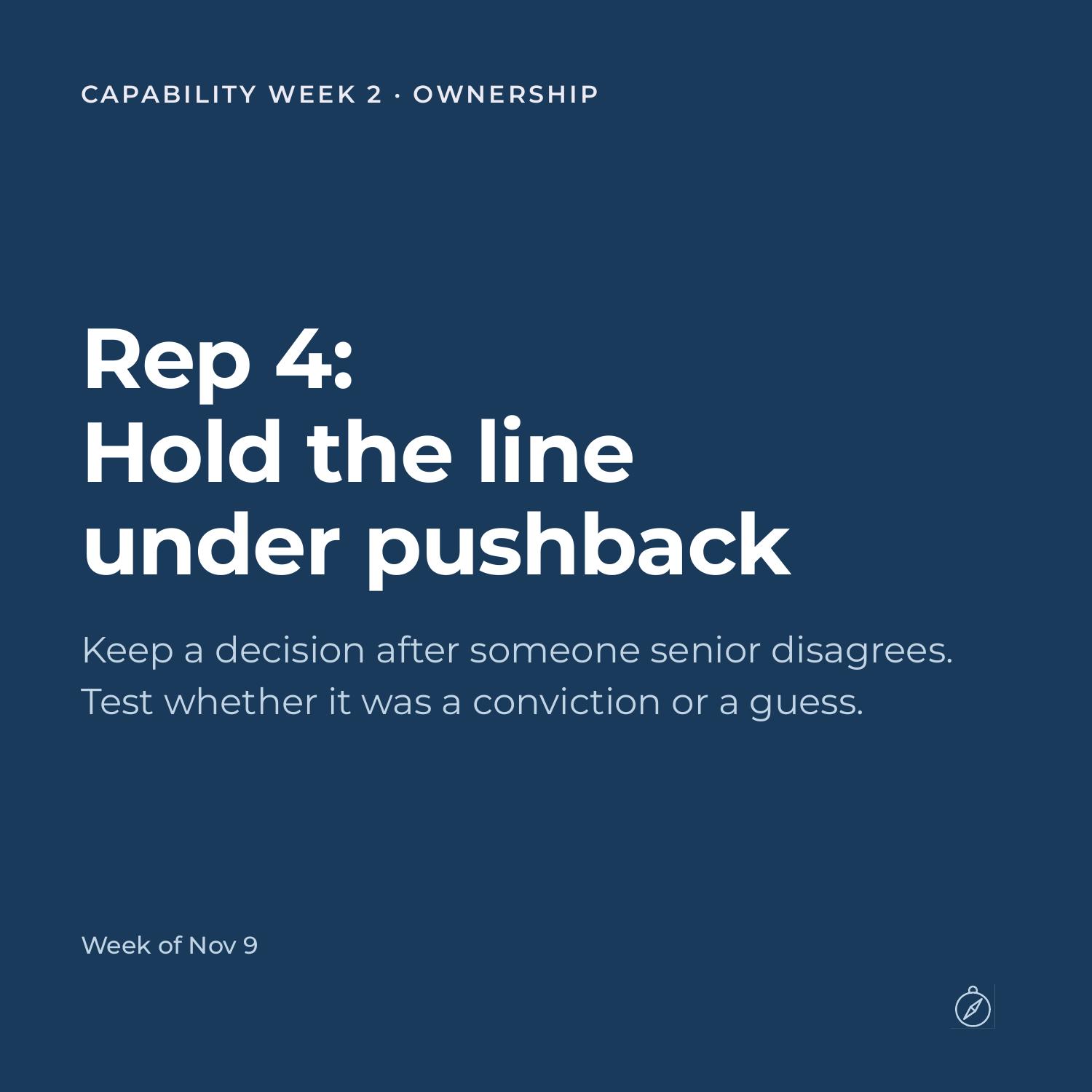
Bring a decision, not a question. Never walk into your boss's office with "what should we do?" Walk in with "here's what I'm going to do unless you see a reason not to."
-
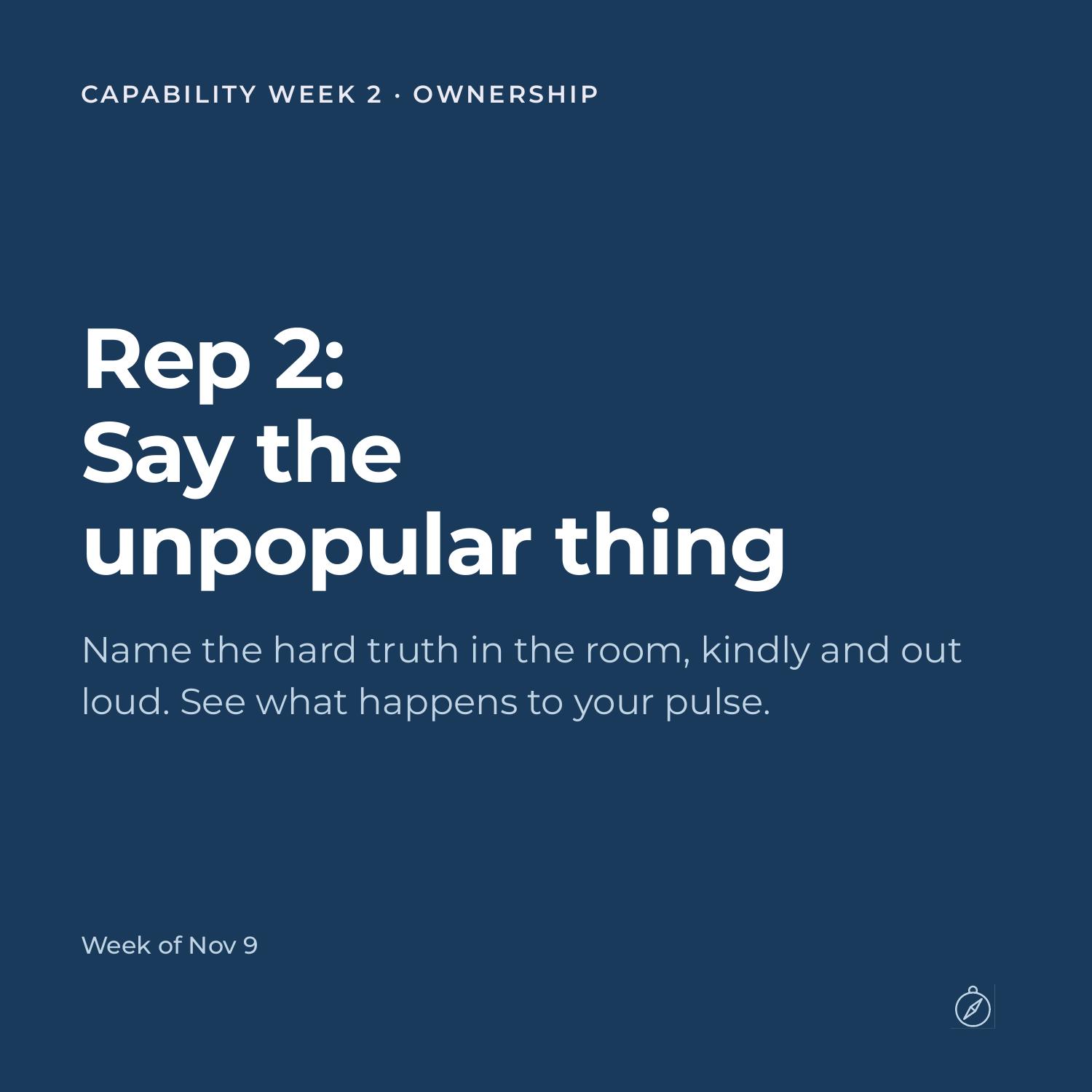
Keep one call you'd normally escalate. Pick it this month. Make it. Tell people you made it.
-
Rehearse the moment you say it. Practice saying "I recommend this, and if I'm wrong, it's on me" out loud, with someone who will push back.
-
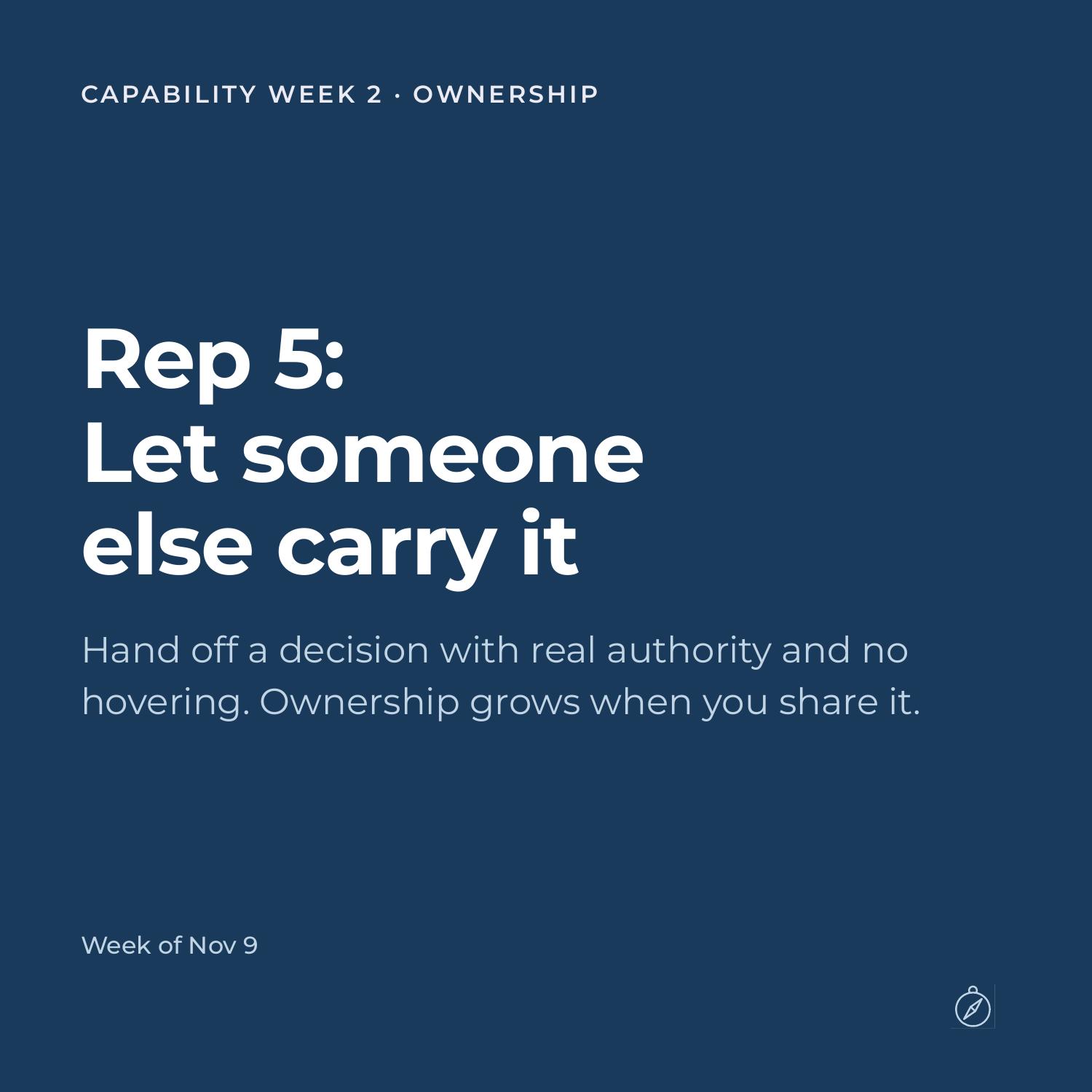
Hand ownership down, not just tasks. If you always make the final call for your team, you're building their tenure, not their ownership.
The Last Call You Handed Up
Here's this week's reflection, and it's worth doing on paper.
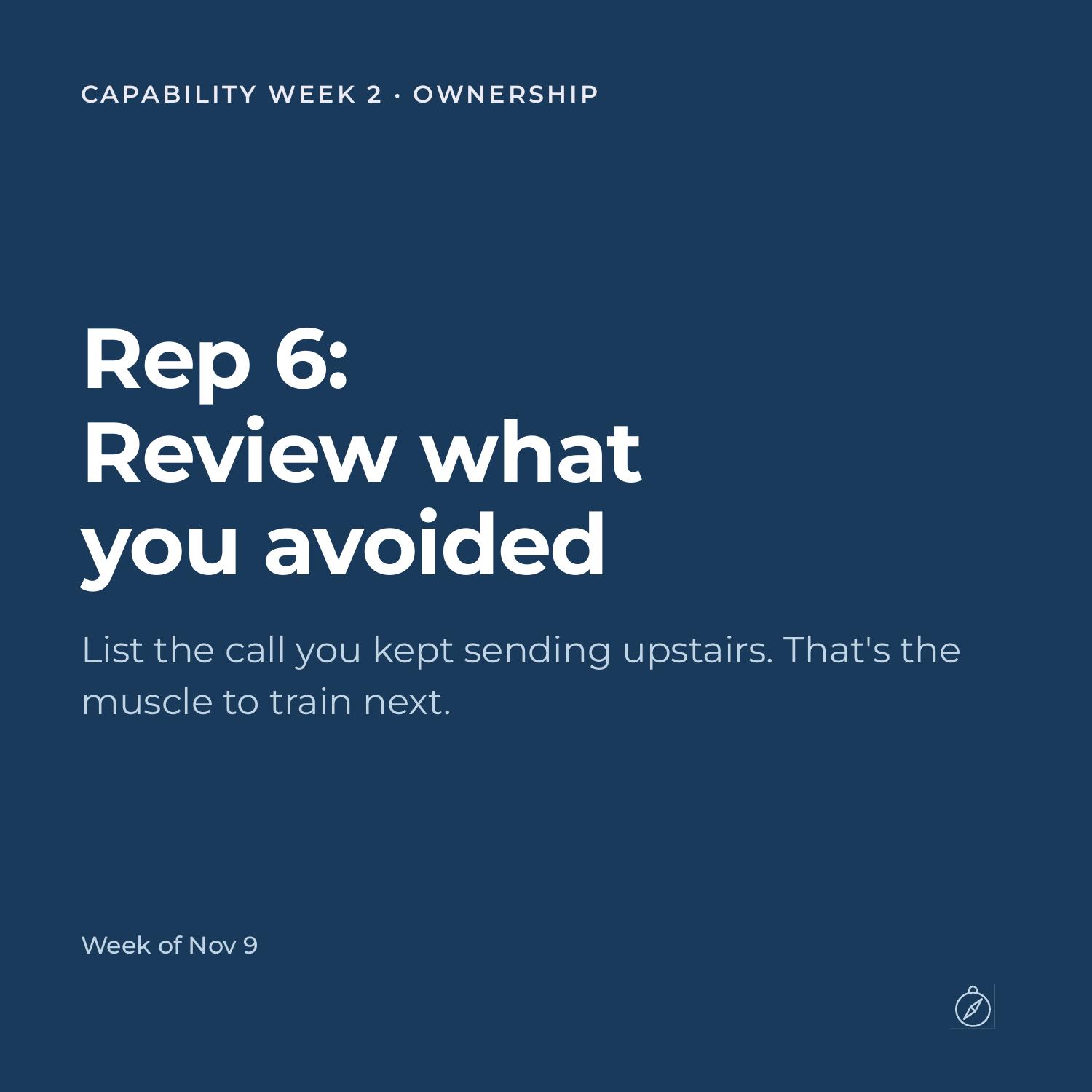
Think of the last decision you escalated. Be honest: did it need to go up? Did someone above you know something you didn't, or was it easier to let them carry it?
Then name one decision coming up in the next thirty days that you will own completely. Your choice, your name, your consequences.
If you can't find one, that isn't a judgment. It's a training plan.
His Name on It
At 8:00, the screen filled with faces. For an understudy, this is the moment the lights come up.
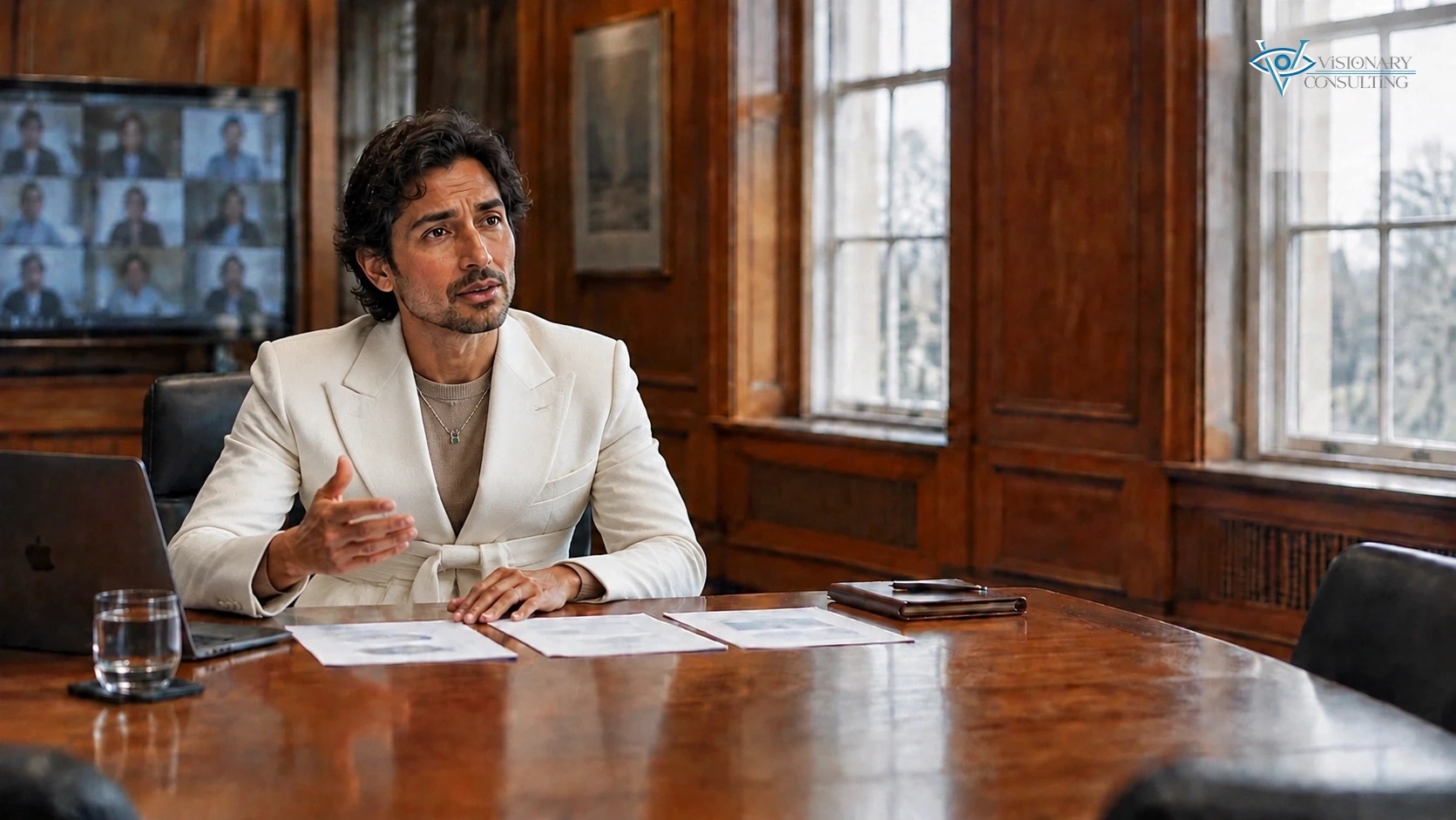
Jeffery laid out the three options and then said the sentence he had never said in that room: "I'm recommending option two. This is my call, and if it's wrong, it's on me. Here's how we'll know by March."
He stumbled once, on a question about cash runway, and said he'd come back with the number by noon. He did.
It wasn't flawless. It was the first time in nineteen years he had owned the final call, and he learned more about his own leadership in forty minutes than in the previous decade.
Tenure tells people how long you've been in the room. Ownership tells them who will make the call when the lights come up.
Next week: the capability AI can't simulate yet. If there's a call coming that you've never owned alone, let's get you ready to make it.
1 / 8
The Capability Series
- 01The Skill No Competency Model Measures
- 02You Can't Coach a Muscle You've Never Tested (you are here)
Ready to talk it through?
Book a free consultation (30 min) →