Wisdom Wednesday
Who Gets a Seat Before the Crisis Forces It
Part 3 of 3 · The Reformation Series
September 16, 2026

Christopher McCormick, Founder & CEO, Visionary Consulting
The Reformation | Week 3 of 5 | Wisdom Wednesday
You've heard of Tom Brady. Seven championships, the strongest case anyone can make for greatest quarterback ever, a career that got its own documentary series. Here's the part almost nobody brings up when they tell that story: you might never have heard of him at all if a linebacker named Mo Lewis hadn't hit his teammate so hard it collapsed a lung.
Before that hit, Brady was the last person New England was building anything around. He'd gone 199th overall in the 2000 draft, sixth round, after a combine where his 40-yard dash was slower than several 300-pound linemen in his own class. Drew Bledsoe, the franchise quarterback he was backing up, told a reporter flatly that Brady would “never be a starter.” He spent his rookie year fourth on the depth chart, the guy every measurable the league trusted had already written off.
Then, on September 23, 2001, Mo Lewis hit Bledsoe hard enough to put him in the hospital, and New England had no plan left except handing the offense to the one player nobody had built a plan around.
That's the question this week is actually asking, stated plainly: does your organization ever hand real authority to someone unlikely on purpose, before a crisis forces its hand, or only after?
And underneath that sits a sharper question. When the unlikely person turns out to be right, was that the system working, or did the system just get lucky that the emergency happened to land on someone capable of rising to it? Two different failures live inside that question, and this week walks through both: what gets measured before someone earns a seat, and what happens to the plan once someone finally has one.
From the sideline to the battlefield
Strip away the pads, the scoreboard, and the play clock, and a football sideline runs on language borrowed directly from war. A team executes a game plan. A quarterback commands the huddle. An offense marches down the field behind a line holding its ground in the trenches. None of that is accidental. Football borrowed the vocabulary of command because the situation underneath is structurally identical: whoever is in charge goes down, and whoever is standing closest has to lead the next play with no meeting first.
Five hundred and ninety-seven years before Mo Lewis's hit, that exact structure played out for real, on an actual battlefield, at a cost no bad quarter could match. July's piece on Joan of Arc described a seventeen-year-old arriving at the Dauphin's court with, in the piece's own words, “zero institutional authority and complete operational confidence.” Nobody had spent years grooming her for command. France's traditional leadership had already failed, and there was nothing left to lose by trying someone unconventional. She got the field the same way Brady got the offense: not because a plan had been building toward her, but because the plan that existed had just run out.
That is a fine story when it works. It is a terrible succession strategy. New England did not have an answer for what happens if Bledsoe goes down, they had a rookie who'd shown enough in practice that Bill Belichick was willing to gamble, and the gamble happened to pay off. France did not have a plan for what happens when the accepted commanders keep losing, they had an unlikely teenager and no better options left. Neither organization was rewarded for planning ahead. Both got lucky that the person standing nearest the emergency happened to be capable.
Is your organization waiting on its own version of a hit nobody planned for to find out who was actually ready?
NBC tried to do it right, and still panicked
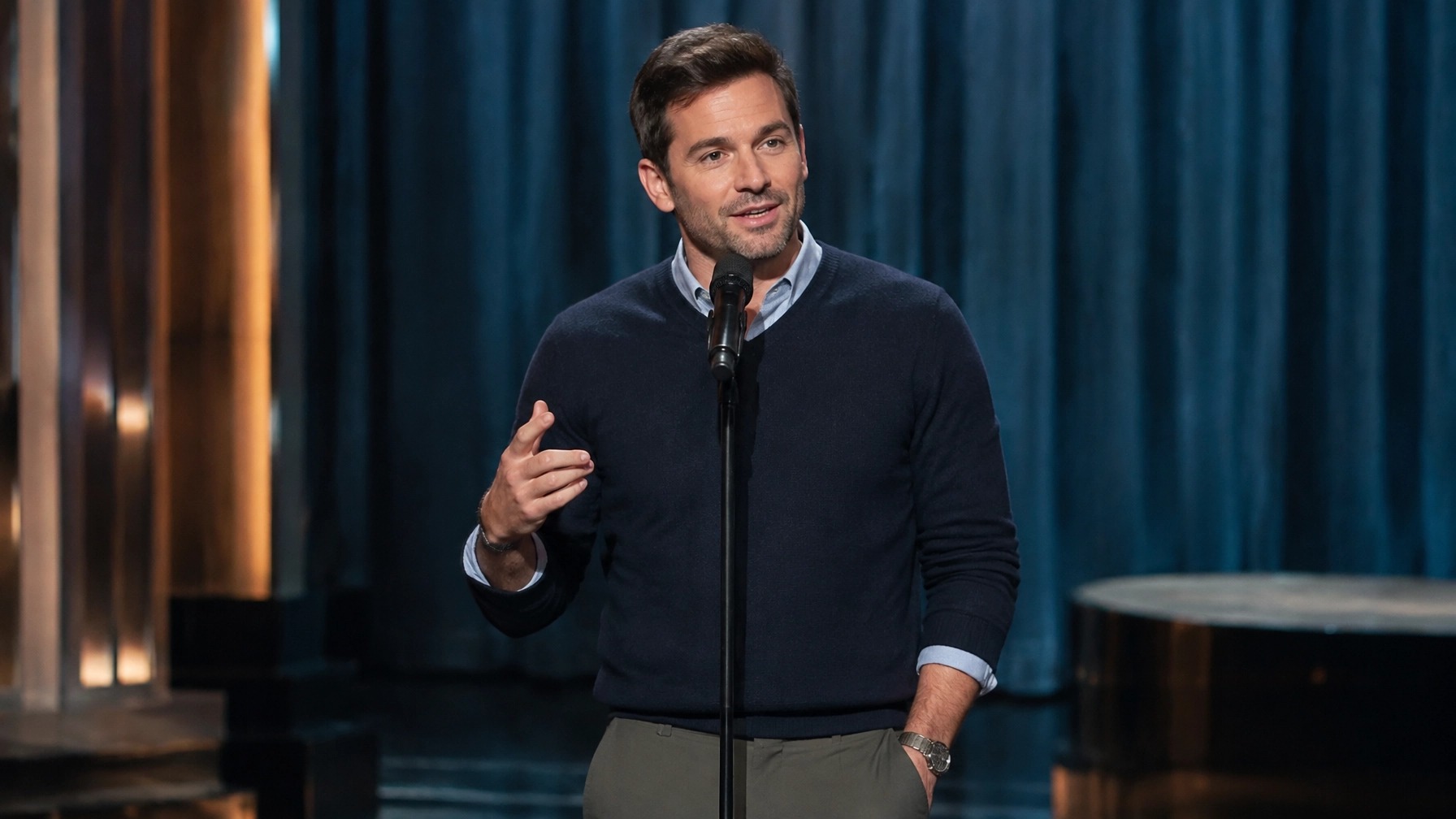
Not every organization waits for its Mo Lewis moment. Some try to do the opposite: name the successor years in advance, on purpose, while it still looks like a choice instead of damage control. It's worth watching exactly where that attempt also went wrong, because this time the failure wasn't a missing plan. It was trusting the wrong scoreboard once the plan was already running.
In September 2004, the National Broadcasting Company (NBC) did something almost no organization ever does: it named its succession decision five years before anyone needed it. Jay Leno, live on air, told Conan O'Brien, “Conan, it's yours! See you in five years, buddy!” No crisis had forced the hand. By the standard this week keeps circling back to, it was close to the textbook answer.
Conan took over on June 1, 2009, pulling more than nine million viewers and running notably stronger with the younger audience advertisers pay a premium for. But older viewers drifted, and within months David Letterman's competing show had edged back ahead in total audience. Meanwhile Leno's new 10 p.m. show, meant to keep him employed and keep NBC's schedule intact, opened to 17.7 million viewers and collapsed to five million within two weeks, dragging local affiliates' nightly news numbers down by an average of 25 percent, and by half in some markets. By January 2010, five months into a plan that had taken five years to build, NBC reversed itself, moved Leno back to 11:35, and pushed Conan to 12:05. Conan refused rather than accept what he called the “destruction” of the show, and left with a reported forty-five million dollar settlement. Leno was back hosting by March 1, 2010.
Here's the detail worth sitting with, and it's the same failure this week keeps pointing at from a different angle: the numbers that broke NBC's nerve weren't a considered read on where the audience was actually heading. They were weeks of Nielsen data, drawn from a national ratings system built on a panel of a few thousand metered households standing in for tens of millions of viewers, during the single most volatile stretch a new show ever goes through. NBC did the hard, proactive part that neither New England nor France ever did. Then it let a short, noisy, small-sample measurement talk it out of the plan the moment the plan got uncomfortable. Building the bench early is necessary. It is not sufficient if the instrument you use to judge the bench, once it's seated, is the wrong one.
Which is the harder discipline for your own organization: building a plan five years out, or trusting it once the first bad month of data comes in?
The permission question, applied to the bench itself

That same proactive-versus-reactive test showed up already this quarter, in a different building. Last month's piece on DEI walking back its own language opened on Marisol, told by legal counsel to quietly retire the diversity, equity, and inclusion (DEI) language she'd written herself four years earlier, while the underlying hiring practices stayed exactly the same. The piece's real argument: “there is a real difference between a company that changed its language because the law required it, and a company that had been waiting for permission to change it anyway.”
Run that same test on a succession bench instead of a careers page. Board diversity disclosure among S&P 500 companies dropped from 48 percent in 2024 to 23 percent in 2025 to 12 percent in 2026. Formal commitments to include an underrepresented candidate in every finalist slate across the Russell 3000 fell from 35.7 percent to 18.6 percent to 12.4 percent over the same two years. Those numbers track what companies are willing to say about who they're developing. They say nothing about whether the stretch assignments and steering-committee seats that turn a fourth-string quarterback into a starter were ever funded to begin with, or whether they quietly stopped the same month the language did. A bench built on genuine investment doesn't need the disclosure to prove it exists. A bench built on waiting for permission evaporates the moment disclosing it stops being required.
Have you considered which one your own bench would turn out to be, if nobody was asking you to report on it?
Confidence without preparation

None of this is unique to unconventional candidates. It's the baseline condition most succession planning starts from. Heidrick & Struggles' 2024 CEO and Board Confidence Monitor, surveying 1,702 leaders (59 percent chief executive officers, 75 percent holding a board seat), found that 57 percent of CEOs and board members had relatively little confidence that their own succession planning process was actually positioning the company well for the future. Only 28 percent globally treated CEO succession as a genuine top priority, a number that only climbed to 54 percent at large public companies with revenue above one billion dollars.
Put plainly: most organizations are not rigorously building any bench, conventional or otherwise. New England got lucky that its fourth-string quarterback turned out to be generational. NBC built the rarest thing in corporate succession, an actual five-year plan, and still let a bad month of ratings undo it. If the ordinary version of this work is already this unreliable, the unconventional version, the one that requires noticing the next Brady or the next Joan before the crisis makes the choice obvious, was never going to happen by accident.
Ask yourself plainly: does your succession bench have an owner, with names and dates attached, or does it live as a slide nobody revisits until the seat is already empty?
Three scoreboards, one blind spot

Come back to the question this piece opened with: does your organization hand real authority to someone unlikely on purpose, or only once a crisis removes every other option? Three domains, three different scoreboards, and the same blind spot running through all of them. A sales floor measures revenue per rep. A football team measures 40 times and bench press. A network measures Nielsen ratings pulled from a few thousand households. Each one gets treated, in the moment, as though it answers the only question that matters: who is right for what's coming next. None of them do. A stopwatch never measured what Tom Brady actually had. A ratings panel from the worst six weeks of a five-year plan never captured whether Conan was right for where the audience was actually headed. A stat block never captures whether the person hitting the number is building anything that survives contact with a real crisis.
The audit this week requires is different from the ones in Weeks 1 and 2. Pull the name of the next person your organization would turn to if whoever holds a critical seat disappeared tomorrow, the way Bledsoe did, or if next year's carefully built plan collapsed under pressure the way NBC's did in 2009. Ask whether that name is on any plan right now, or whether it would only become obvious in the scramble. If it's the second one, you don't have a bench. You have a hope that the next emergency produces its own Tom Brady.
Next week, this series turns to a related failure that starts the moment someone actually does get the seat: whose name ends up on the work once they're in it. Getting the right person into the room, proactively or in a panic, is only the first problem. What happens to their work once they're there is a separate one.
Sit with this before your next planning cycle: if the crisis hit tonight, would your organization be running a plan, or running a hope?
Where Vision Meets Reality.
The The Reformation Series
A five-part series on rebuilding the systems The Reckoning exposed, starting with how organizations decide who gets promoted.
- 01Who Actually Gets Promoted
- 02What Actually Gets Measured
- 03Who Gets a Seat Before the Crisis Forces It (you are here)
Ready to talk it through?
Book a free consultation (30 min) →